Road, Air or Sea? Choosing the Right Freight Mode for Dubai to Saudi Arabia
Cargo moving between the UAE and Saudi Arabia can travel by road, air, or sea, and the right choice depends less on habit or on whichever mode a shipper used last time, and more on what the specific shipment actually needs: speed, volume, cost efficiency, or some balance of the three. Businesses that default to the same mode for every shipment, regardless of what is actually being moved, routinely overpay on some orders and risk missed deadlines on others.
This guide walks through what each mode is actually built for on this specific corridor, where the real cost and time tradeoffs sit, and how to think about mixed-mode shipments when a single order has both urgent and non-urgent components.
Road Freight: The Corridor's Workhorse
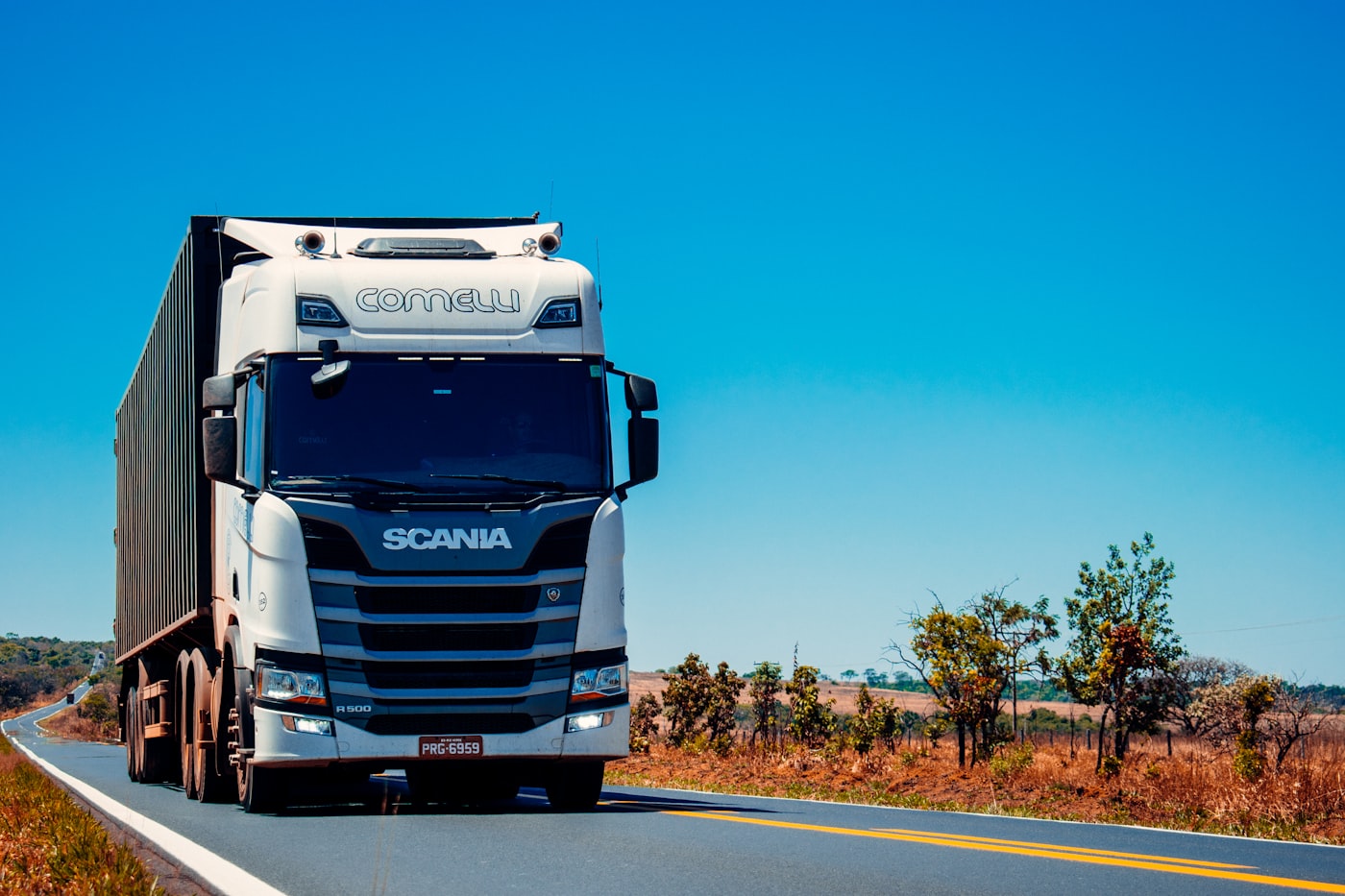
Road freight via the Al Ghuwaifat exit and the Al Batha entry into Saudi Arabia is the default choice for most Dubai-KSA cargo because it balances cost and speed well for palletised and containerised goods. Typical transit runs one to two days to Dammam, two to three days to Riyadh, and three to four days to Jeddah, with some variation depending on border conditions and the time of year. It suits full truck loads, shared groupage shipments, and essentially anything too large, heavy, or awkwardly shaped to justify air freight rates.
Road freight also offers something the other two modes cannot match on this specific route: direct door-to-door delivery without a mode transfer. A pallet loaded in Dubai stays on the same trailer, or is transferred once at a consolidation hub for groupage cargo, until it reaches the final delivery address — there is no port handling, no airport transfer, and no additional loading and unloading cycle beyond what road freight itself requires.
Air Freight: When the Calendar Matters More Than the Invoice
Air freight moves through Dubai International (DXB) or Al Maktoum International (DWC) to major Saudi airports and can deliver next-day in many cases. It costs considerably more per kilogram than road freight, which is exactly why it makes sense for a specific category of cargo: urgent documents, spare parts holding up a production line, high-value electronics where the cost of a delay outweighs the freight premium, or last-minute retail restocks ahead of a fixed sales date. It does not make sense for routine bulk cargo where the deadline has flexibility, because the cost differential rarely justifies the time saved for non-urgent goods.
Air freight also has practical limits that road and sea do not share to the same degree — dimensional and weight restrictions per aircraft type, higher sensitivity to volumetric pricing, and generally tighter restrictions on hazardous or oversized items. A shipment that would move without complication by road can sometimes require special handling or be refused outright for air transport, so it is worth confirming compatibility before assuming air is simply the "faster version" of the same shipment.
Sea Freight: Volume Over Speed
For very large volumes, particularly project cargo or bulk commercial shipments where transit time has flexibility, sea freight via Jebel Ali port can be the most economical route, especially when paired with onward road distribution inside Saudi Arabia to reach inland cities. It is rarely the fastest option on this corridor — sea freight generally makes more sense for cargo arriving from further afield that then connects to a Jebel Ali-based distribution network, rather than for freight originating within the UAE itself, where road freight's direct land route is usually faster and simpler for the same Saudi destination.
Where sea freight earns its place on Dubai-KSA logistics is in the "last mile from the port" scenario: goods arriving into Jebel Ali by sea from international origins, then continuing to Saudi Arabia by road as part of a combined multimodal journey. Treating sea freight and Dubai-KSA road freight as two stages of one supply chain, rather than as competing options for the same short-haul journey, is usually the more useful way to think about it.
| Mode | Best for | Typical transit | Cost profile |
|---|---|---|---|
| Road | Pallets, groupage, most commercial cargo | 1-4 days depending on city | Moderate, most economical for direct UAE-KSA moves |
| Air | Urgent, high-value, low-weight cargo | Next day | Highest per kilogram, justified by speed |
| Sea + road | Large volume, flexible deadline, multimodal origin | Longer, cost-driven | Lowest per cubic metre at scale |
Mixing Modes on One Order
It is common, and often the smartest approach, to split a single order across modes: the bulk of the shipment travels by road while a small, genuinely urgent portion flies. A furniture retailer restocking a Riyadh showroom ahead of a launch date might send the bulk order — sofas, tables, storage units — by road on the normal schedule, while air-freighting only the display pieces or promotional stock that absolutely needs to be in place for the launch. This approach captures road freight's cost advantage for the majority of the order while still meeting a hard deadline on the pieces that matter most.
The key to making split shipments work smoothly is deciding the split at the planning stage, not improvising it after a delay has already happened. A shipment that gets split reactively — because the road portion is running late and part of it needs to be air-freighted to save the deadline — costs more overall than one planned as a split from the start, because reactive air freight is booked under time pressure with less room to negotiate space or rate.
The mode that looks cheapest on paper is not always the cheapest once a missed deadline, a rush reorder, or a warehousing delay is factored into the real cost of the shipment.
How Weight and Volume Interact with Mode Choice
Air freight pricing is especially sensitive to volumetric weight — the calculation based on the space a shipment occupies rather than its actual mass — because aircraft cargo holds are constrained by volume as much as by weight capacity. Bulky, lightweight cargo that would price reasonably by road can become disproportionately expensive by air once volumetric weight is applied, which is one of the most common reasons a shipper's first air freight quote comes back higher than expected. Dense, compact, heavy cargo behaves the opposite way: it often prices more favourably by air relative to its actual value, because it does not consume disproportionate aircraft volume.
This is worth checking before assuming air freight is off the table for a given shipment on cost grounds alone — a compact but heavy component, for example spare parts or machinery pieces, can sometimes fly at a more reasonable relative cost than a bulky but light item like packaged furniture or foam-heavy packaging.
Reliability and Predictability Differences Between Modes
Road freight on this corridor has the advantage of being the most-travelled and best-understood route, with predictable transit windows and well-established procedures at the Al Batha crossing. Air freight is generally the most schedule-reliable in terms of hitting a stated delivery day, though it is not immune to disruption from weather or airport-side delays. Sea freight, being the longest and most multi-stage journey, tends to have the widest variance in actual transit time, since it depends on port schedules, vessel availability, and onward road connection timing all lining up.
For shippers weighing predictability as heavily as raw speed, this ordering — air, then road, then sea — is a reasonable rule of thumb, though individual shipments can vary based on specific routing and season.
Environmental and Packaging Considerations by Mode
Each mode also places different demands on how cargo is packed. Air freight cargo benefits from lightweight, space-efficient packaging given the volumetric pricing sensitivity described above — over-boxing a shipment for air freight directly inflates its cost. Road freight cargo needs to withstand vibration and temperature cycling over a multi-day desert highway journey, which favours sturdier packaging even at some weight cost. Sea freight cargo, given the longest transit and the most handling touchpoints between vessel, port, and onward road transport, generally needs the most robust packaging of the three, particularly against humidity exposure during the sea leg.
Customs and Documentation Differences Across Modes
The core documentation set — commercial invoice, packing list, and where relevant a SABER certificate — applies regardless of mode, but the process around it differs. Air freight documentation typically needs to be finalised earlier relative to departure, since airline cutoff times for cargo acceptance are stricter than a road freight pickup window. Road freight allows slightly more flexibility to finalise paperwork close to departure, though this is not an excuse to leave it until pickup day. Sea freight, with its longer lead time between booking and vessel departure, generally allows the most flexibility in documentation timing, but any errors take longest to correct given the number of parties involved across the vessel, port, and onward transport stages.
Regardless of mode, the documentation standard that matters most is accuracy against the physical cargo — an itemised packing list that matches what is actually loaded moves through customs inspection faster whether the shipment travels by road, air, or sea.
A Practical Decision Framework
When deciding between modes for a specific shipment, four questions tend to settle the decision quickly. First, is there a genuinely fixed delivery date, or is there flexibility of a few days either way? A hard deadline pushes toward air freight for at least the critical portion. Second, what is the shipment's volumetric weight relative to its actual weight — bulky and light favours road, dense and heavy is more air-freight-friendly on cost. Third, what is the total volume — a handful of pallets suits road groupage or FTL, while very large volumes with flexible timing may suit a sea-plus-road combination if the cargo is arriving from outside the UAE. Fourth, what is the per-unit value — high-value cargo often justifies the tighter handling and reduced transfer points that air freight or dedicated FTL road transport offer, even at a cost premium, simply to reduce risk exposure during transit.
Running a shipment through these four questions before requesting a quote generally produces a clearer sense of which mode fits, rather than defaulting to whichever mode was used for the last shipment regardless of whether this one shares the same characteristics.
Common Mode-Selection Mistakes Shippers Make
The most frequent mistake is treating mode choice as a one-time decision made for the business rather than per shipment. A company that ships both routine restocks and occasional urgent orders often benefits from using different modes for each, but many default to whichever mode they set up first, either overpaying on routine cargo or risking deadlines on urgent cargo as a result. A second common mistake is requesting an air freight quote without first checking volumetric weight, then being surprised when the price is far higher than the road freight equivalent — checking this ratio before requesting a quote avoids the surprise and the wasted back-and-forth.
A third mistake, more relevant to sea freight, is assuming it is automatically the cheapest option for any large-volume shipment, without accounting for the additional port handling and onward road transport cost that a purely UAE-originated shipment would not need to pay at all if it simply moved by road directly. Sea freight's cost advantage is real, but it depends on the cargo's actual origin and routing, not on volume alone.
How We Help You Decide
When you send us your cargo details — weight, volume, deadline, and value — we quote the mode that actually fits the shipment's real requirements, not the one that is easiest to sell or the one you happened to use last time. For mixed-urgency orders, we will tell you plainly which portion is worth air-freighting and which is not, rather than defaulting either to the cheapest option that risks the deadline or the fastest option that inflates the cost unnecessarily.
For businesses shipping regularly into Saudi Arabia, we can also help build a standing mode strategy — for example, routine restocks by scheduled road groupage, with an agreed air freight fallback triggered only when a specific deadline is at risk — so that mode decisions do not need to be re-litigated for every single shipment.
How Insurance Requirements Differ Slightly by Mode
Cargo insurance is available and worth arranging regardless of mode, but the practical risk profile insurance is protecting against shifts depending on how a shipment travels. Road freight risk concentrates around vibration, stacking, and border-crossing handling, as covered in depth elsewhere. Air freight risk is generally lower in terms of handling frequency, given fewer touchpoints between origin and destination, but the value density of typical air-freighted cargo is often higher, meaning the financial exposure per shipment can be larger despite the statistically lower incident rate. Sea freight, with its longer transit and multiple handling stages between vessel, port, and onward transport, carries a different risk profile again, with humidity and extended transit time as more prominent factors than in the other two modes.
Discussing insurance coverage specifically in the context of the mode actually chosen, rather than assuming a single generic cargo insurance product covers all three scenarios identically, ensures the coverage actually matches the real risk profile of a given shipment.
Environmental Sustainability Considerations Across Modes
Businesses increasingly weigh environmental impact alongside cost and speed when choosing a freight mode, and the three options on this corridor differ meaningfully in this respect. Air freight carries a significantly higher carbon footprint per kilogram moved compared to road or sea freight, reflecting the fuel intensity of air transport relative to ground or sea-based alternatives. Road freight sits in the middle, while sea freight, for the portion of a journey it covers, is generally the most fuel-efficient per unit of cargo moved, though this advantage applies primarily to the sea leg itself rather than the combined door-to-door journey once onward road transport is included.
For businesses with sustainability commitments that factor into their logistics decisions, this is worth weighing alongside the practical cost and speed factors covered throughout this guide, particularly for shipments where the deadline has enough flexibility that a lower-emissions mode is a genuinely viable option rather than one ruled out entirely by time pressure.
Frequently Asked Questions
Is air freight always faster than road for Dubai to Saudi Arabia?
Almost always in raw transit time, since air freight typically delivers next-day versus one to four days by road, but the total door-to-door time difference narrows once airport handling and last-mile delivery on both ends are included.
When does sea freight make sense for this route?
Mainly when cargo is arriving into Jebel Ali from an international origin and then connecting to Saudi Arabia by road, rather than for cargo that originates within the UAE, where direct road freight is usually faster and simpler.
Can I split one order across road and air freight?
Yes, and it is often the most cost-effective way to meet a hard deadline on part of an order while keeping the bulk of the shipment on more economical road freight — planning the split in advance works better than doing it reactively.
Why did my air freight quote come back higher than I expected?
Volumetric weight is the most common reason — bulky, lightweight cargo can price disproportionately high by air because aircraft holds are volume-constrained, even if the actual weight is modest.
Which mode is most reliable for hitting a delivery date?
Air freight generally offers the most schedule reliability, followed by road, with sea freight showing the widest variance due to the number of stages involved in a combined sea-plus-road journey.