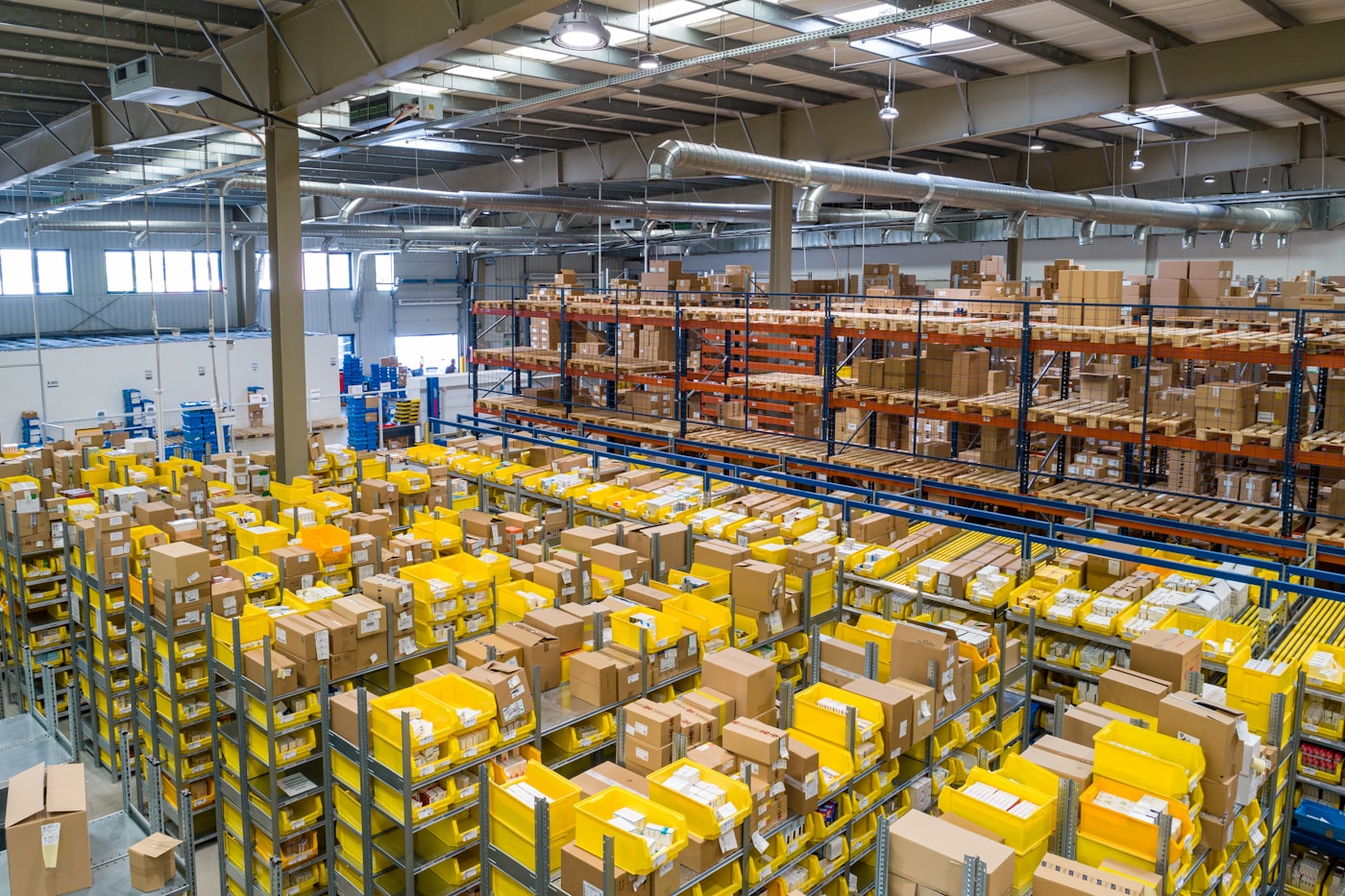
Road, air, sea, or courier? That single decision shapes what your shipment costs, when it lands, and how it should be packed. As a cargo company in Dubai handling all four modes plus warehousing, we spend much of every day helping customers make exactly this call. This page lays out the decision logic openly, so you can arrive at the answer before you even message us.
1. Start with the only three questions that matter
How heavy and bulky is the load? When must it arrive? What is it worth relative to the shipping cost? Nearly every mode decision falls out of those answers. A 40 kg carton needed in Riyadh next week is a road shipment. The same carton needed tomorrow is air. Twelve pallets of tiles with no deadline may justify sea to a Saudi port, and a 3 kg document pouch is courier territory regardless of urgency.
Notice what is absent: brand preferences, mode habits, whatever you used last time. Requirements decide; the rest is pricing.
2. Road freight: the GCC default
For UAE-to-Saudi and wider Gulf traffic, trucking through the Al Batha / Al Ghuwaifat crossing is the workhorse — 3–7 working days for most GCC road cargo after dispatch, with door-to-door handling and no airport-style weight penalties. Groupage (shared trailer) suits anything from a few cartons to several pallets; a dedicated vehicle suits full loads and hard deadlines.
Choose road when weight is meaningful, the deadline is measured in days not hours, and the destination is reachable overland. That describes the majority of regional shipments.
3. Air freight: paying for hours
Out of DXB and DWC, air moves consignments in hours of flight time plus a day or two of handling and clearance at each end. The price per kilogram is a multiple of road, and volumetric rules punish light, bulky goods. It earns its cost when downtime is expensive — a stopped production line, a product launch, perishables, or a passenger's missed baggage of commercial samples.
Practical tip: before booking air for a "same-week" deadline, price a dedicated road vehicle too. For Saudi destinations, a direct truck often meets the date at a fraction of the airfreight bill — speed you need, not speed you're sold.
4. Sea freight: patience rewarded
From Jebel Ali, containerised sea freight suits large, non-urgent volumes — factory orders, project materials, full household moves heading beyond the Gulf. Port-to-port schedules plus clearance make it the slowest option, and for intra-GCC lanes the road network usually beats it on total time. Where sea shines is cost per cubic metre on genuinely big loads and long-haul destinations.
5. Courier and warehousing: the supporting cast
Courier handles documents and small parcels with tracking and speed, priced by the half-kilogram. Warehousing in Dubai — including bonded storage — bridges gaps: stock held near Jebel Ali and released to road or air as orders demand. Combining modes is common; a client might hold goods in storage, courier samples ahead, and truck the bulk after approval.
6. The comparison, condensed
| Mode | Best for | Watch out for |
|---|---|---|
| Road | GCC destinations, pallets, household moves | Working-day windows, border inspection time |
| Air | Urgent, valuable, or perishable goods | Volumetric weight, per-kg cost |
| Sea | Bulk volumes, non-urgent, long-haul | Longest transit, port handling steps |
| Courier | Documents, parcels under ~30 kg | Expensive per kg as size grows |
7. What a full-service operation adds to the choice
Mode-neutral advice
All four options priced side by side, so the recommendation follows your requirement, not our margin.
One clearance team
Customs paperwork handled identically whether your goods fly, sail, or roll across the border.
UAE-wide collection
Pickup from any emirate feeding whichever gateway the chosen mode requires.
Since every gateway — DXB, DWC, Jebel Ali, and the Saudi land border — sits within the same operational radius, switching modes mid-plan is a phone call, not a crisis.
8. A quick self-check before you request a quote
- Weight and dimensions noted, even roughly
- Hard arrival date, or honest "whenever it's cheapest"
- Goods value known, for insurance and declared value
- Destination address with a receiver contact number
- Anything fragile, regulated, or unusual flagged
- Photos of the goods ready to attach
Not sure which mode fits?
Send the three answers — size, deadline, value — and get a same-day comparison across road, air, sea, and courier.
Compare your options with one enquiry
"I assumed my machine spares had to fly to Dammam. They priced a dedicated truck against the airfreight and the truck won by days-versus-dirhams maths I couldn't argue with."
Arjun M., online spare-parts seller, Al Quoz"We split one order: samples by courier to Riyadh in two days, bulk stock by road the following week. One company, one invoice, two modes — that flexibility is why we stayed."
Noora K., cosmetics brand founder, Dubai"Shipping our villa contents to Muscat, they talked us out of sea freight — road was faster and cheaper for the volume. Advice that reduced their own invoice earned real trust."
James T., expat family, Arabian RanchesFrequently asked questions
How do insurance and declared value work across modes?
The declared value on your paperwork anchors both customs assessment and any insurance claim, whichever mode you choose. Cover is priced against that figure and varies slightly by mode risk profile. Declare honestly, insure anything whose loss would sting, and keep pickup photos as your condition record.
What does the receiver have to do?
Regardless of mode: be reachable, provide ID if clearance requires it, and settle any destination duties or taxes. Air and sea add a step — goods may arrive at an airport or port terminal where the consignee confirms details — while road door-to-door needs only availability at the delivery address.
Which mode is safest for fragile or high-value items?
Packing matters more than mode. Air involves the fewest transit days but more handling events; road means one vehicle after consolidation. Either way, fragile pieces get crating and cushioning, and high-value consignments get sealed loading, photo documentation, and insurance sized to declared value. We spec protection per item, not per mode.
What actually drives the price difference between modes?
Chargeable weight rules: road and sea bill mostly by space (CBM), air by the higher of actual or volumetric weight, courier by half-kilogram steps. Add urgency, packing needs, and clearance complexity. Dense cargo favours air less than you'd think; bulky-light cargo punishes it severely.
Where can you collect from?
All seven emirates. Dubai pickups — Deira, Bur Dubai, Al Quoz, JLT, Jebel Ali and beyond — feed the warehouse fastest, while Sharjah, Ajman, Abu Dhabi, and Northern Emirates collections are scheduled daily. The same pickup serves any mode, so choosing air over road never changes your part of the process.